National Study of Student Hazing: 2027
Landmark study surveys 22,000-plus college students to date on 40 campuses for nationwide insights into hazing
In Spring 2027, StopHazing and the Hazing Prevention Research Lab at the University of Maine will release results from our new National Study of Student Hazing.
It’s the first comprehensive view of how, when, and where college students experience hazing since our original study in 2008, Hazing in View: College Students at Risk.
The 2008 study gave the US its first look at the scale and impact of student hazing. It has been cited hundreds of thousands of times in publications, policy briefs, presentations, and news articles, and has informed state and national policies and laws.
The new study is led by Dr. Elizabeth Allan, who also led the 2008 study. Allan is Professor of Higher Education at the University of Maine, the Director of the Hazing Prevention Research Lab, and StopHazing’s founder.
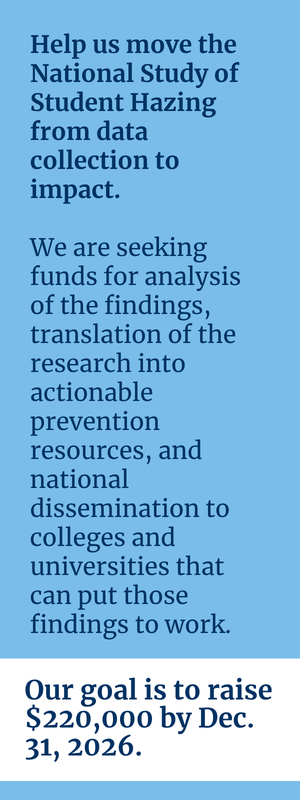
Allan and the research team have conducted more than 22,000 surveys of college students nationwide to date at 40 colleges and universities. We are currently completing final surveys and seeking additional funding to analyze and share the results.
With full funding secured, survey data collection will be completed in Fall 2026 and findings released in Spring 2027.
Separate survey of campus hazing prevention leaders planned
We will also launch a separate survey of campus professionals to examine the state of staff preparedness in hazing reporting and prevention. The survey will reach college and university leaders and staff, including deans of students, coaches, campus safety officers, health and well-being staff, and fraternity and sorority life advisers.
The data will help us understand staff involvement and preparedness for implementing hazing prevention strategies — information that will help us develop new training tools and reporting systems. With funding secured, the campus professionals survey will launch in early 2027, with findings expected in Fall 2027.

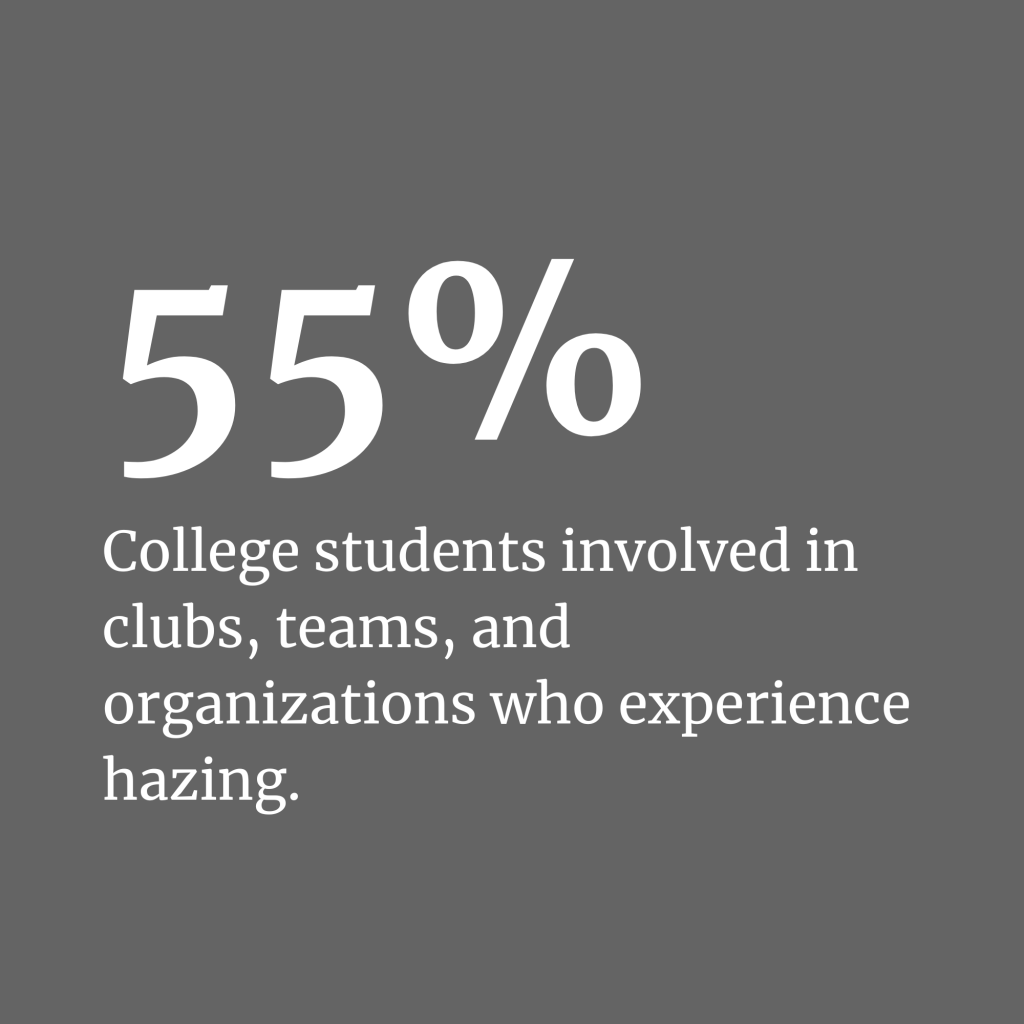
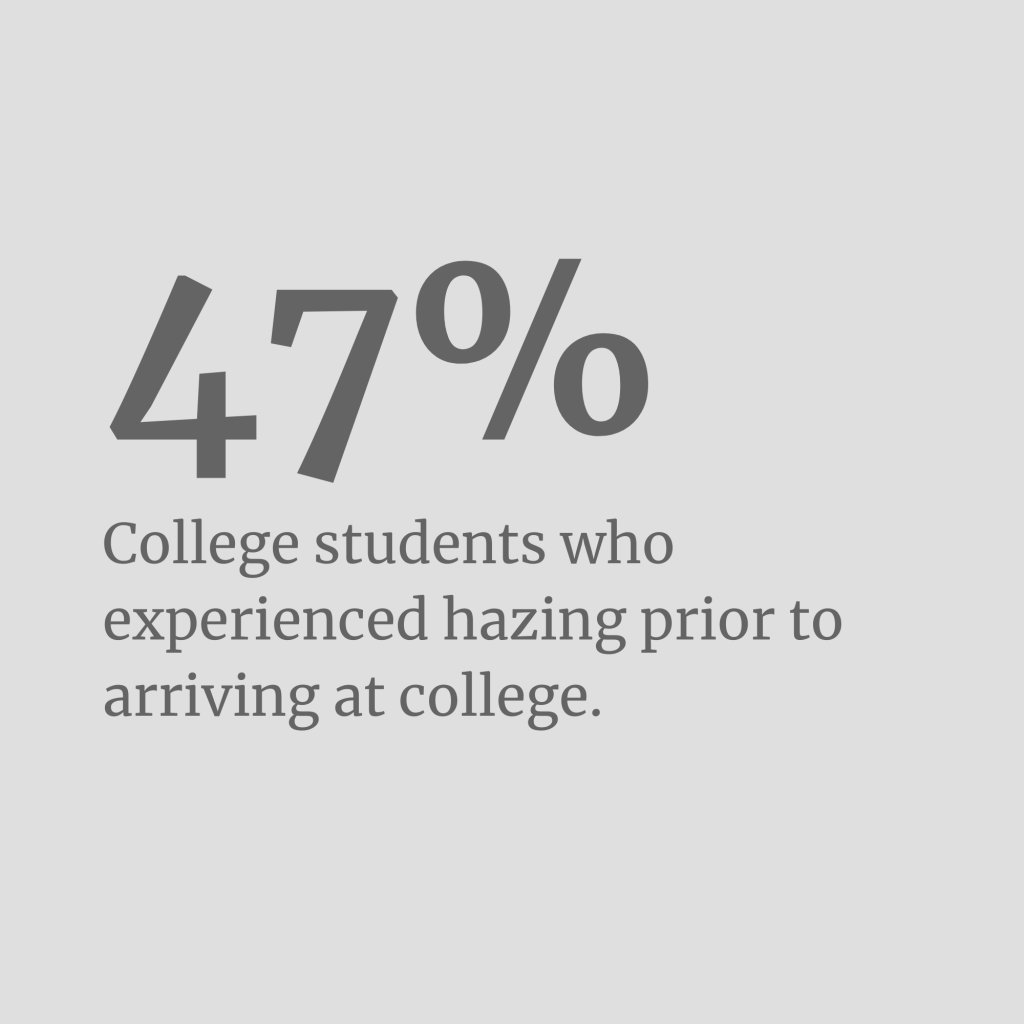
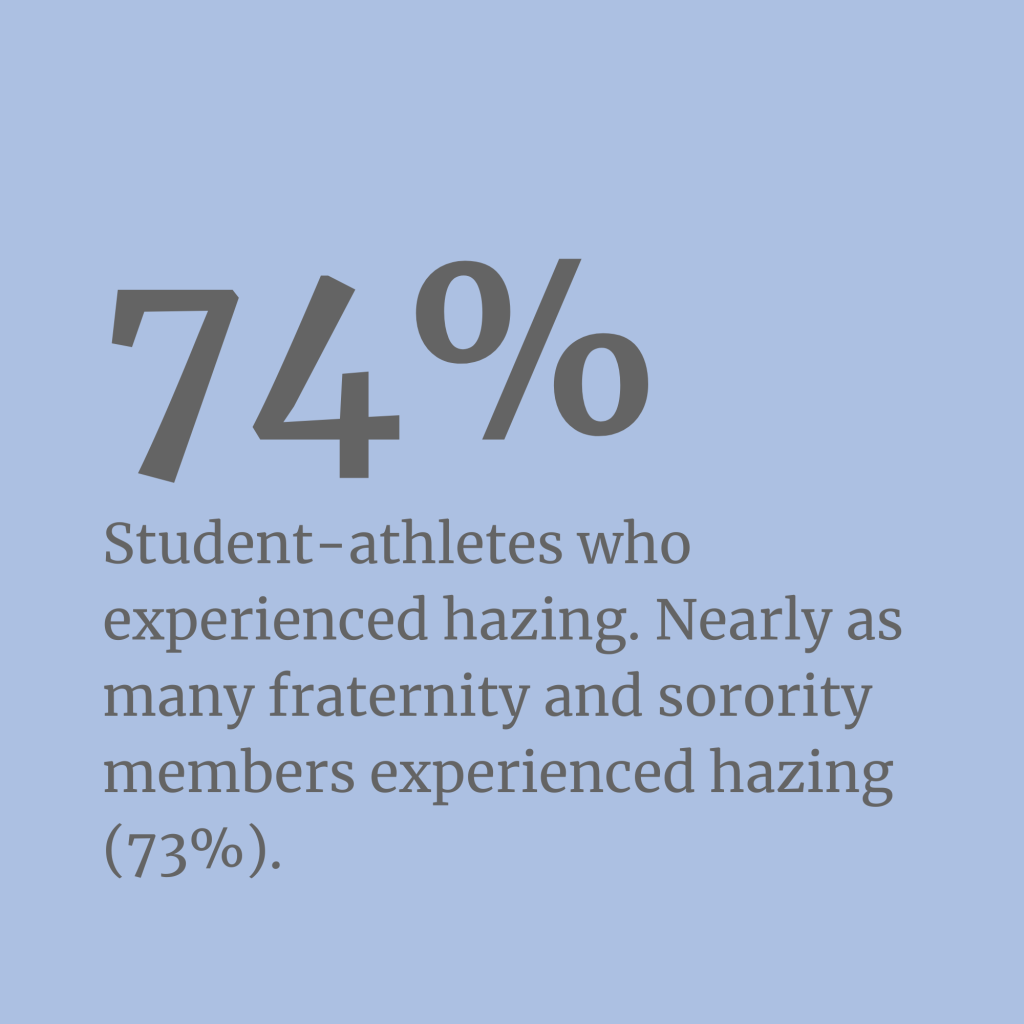
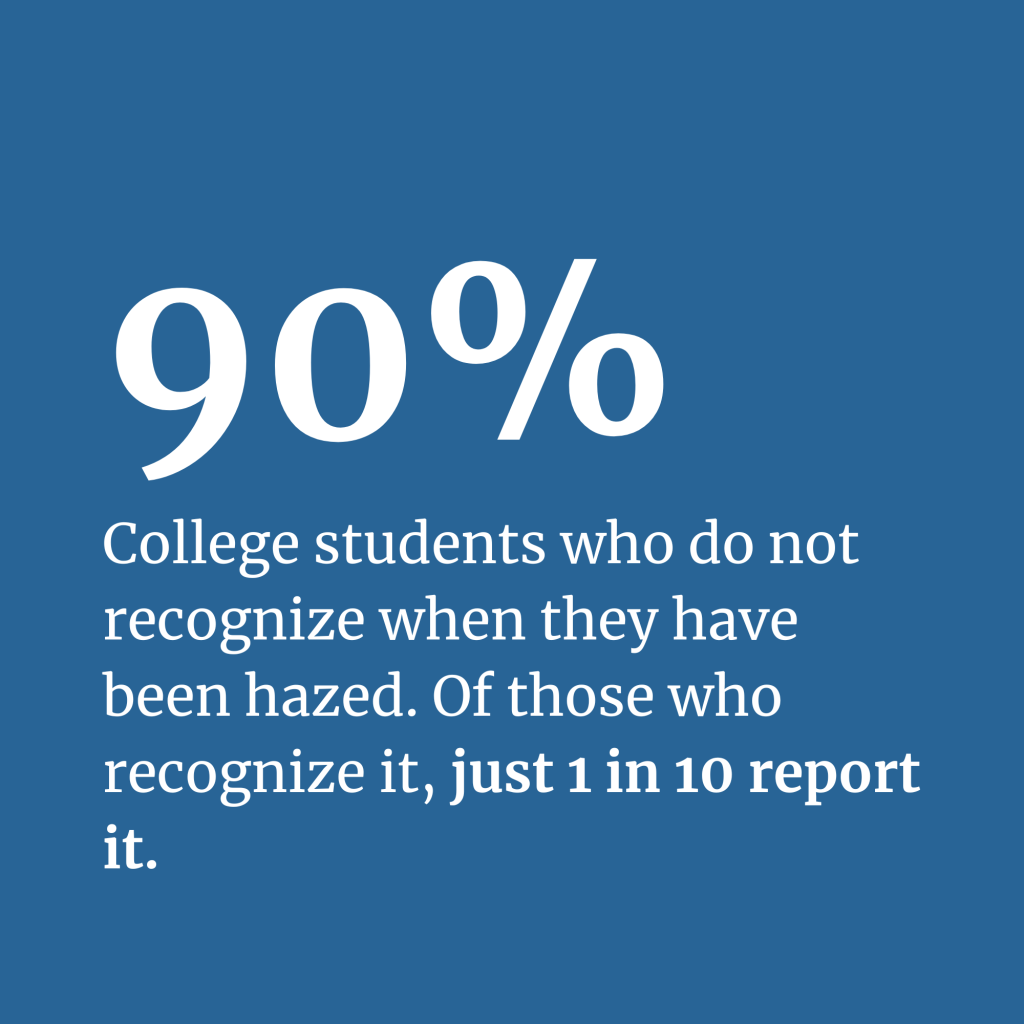
What we know about college hazing from the original 2008 study
Resources
- FAQ for institutions interested in participating in the National Study of Student Hazing: Download the FAQ
- Read the original 2008 National Study of Student Hazing: Download the 2008 study

Our Partners